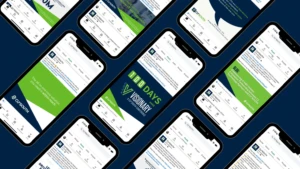
Every year, one of our biggest projects at Brand825 is CU*SOUTH’s Visionary conference.
We do everything for the conference, from booking the venue to planning the sessions to deciding whether we want the charcuterie display or crab puffs for the hors d’oeuvres spread (and looking up how to spell hors d’oeuvres every time). Plus, we’re boots on the ground at the event. Visionary is almost an entire second client in itself. It definitely looks like one in our project tracker.
When I get back home after a whirlwind couple of days with the CU*SOUTH team and finally take a breath, naturally I reflect on the whole experience. This May, I thought: “what’s it all for?”
Of course, I know the answer. But it’s good to step back every now and then and remind ourselves why we do the work that we do (besides record attendance this year, but who’s counting?).
Events are some of the most complex and challenging projects we take on, but they’re worth every bit of effort. A good event is a marketing goldmine, if you know how to take advantage of it.
A lot of companies leave the bulk of that value on the table, though. ZoomInfo lays out a solid rule of thumb: the event itself is only about 20% of the work. The other 80% comes before and after. Most teams invert that, pouring everything into a handful of days. For them, the event work starts with pure logistics and ends when the “thank you” emails and feedback surveys go out. The trouble is that the real ROI comes from the 80%.
Here’s how we approach events to maximize value, and how you can do the same for your business, too.
Tip 1: Plan Content Capture Before the Event, Not After
The single most common mistake in event marketing is not knowing what content you plan to get out of it. An annual conference can fuel months of marketing, if not a full year, so long as you’re prepared. Trying to piece a content plan together after the fact means you may have already missed your most valuable opportunities. You can’t get a video testimonial from a customer if they’ve already flown home, after all.
Map your content plan before the event. Ask what sales, customer success and other stakeholders need, then work backwards from there. When the big day arrives, those answers will help you determine who needs to be where taking notes, photos and videos.
The good news is that you already know plenty going in that can help you draft a content plan in advance. You have the agenda, the speakers, the attendees and the key topics of discussion. You probably even have the presentation decks. The event, at that point, is a chance to collect the details and the color: quotes, videos, photos, candid moments and surprises that you can only get by being there.
There are really two timeframes to consider when planning event content: “now” and “later.” “Now” content is mostly social, typically live (or near-live) posts. Think photos, speaker quotes shared just after the session, short-form videos and attendee shoutouts.
This kind of content pulls double-duty. It extends the event’s reach to people who aren’t there, while also connecting with and shaping the experience for people who are.
No plan survives first contact with reality totally intact, so improvising and spotting impromptu content opportunities is key, but you can still plan to make the most of it, based on the information you have walking in (see above). Speaking from experience, I highly recommend assigning someone whose only job at the event is to capture these moments and produce this kind of content. Divided attention means too much slips under the radar.
The “later” content is everything else. Session recordings can become gated webinars, while short clips can find a place in your social feed. Customer quotes become sales enablement. Themes that emerged across multiple sessions can form the backbone of research reports or white papers in the future. The possibilities really are endless. A well-captured event keeps producing marketing value long after it wraps up.
Tip 2: Keep the Momentum Going
Hot leads aren’t the only attendees worth following up with. Everyone who showed up to your event spent time with your brand, and time spent with your brand is an opportunity (isn’t this what marketing is all about?). What that opportunity turns into depends on what you do in the days and weeks after the event.
The approach varies by relationship. The leads you actually spoke with on the floor need the most direct outreach. A personalized email, ideally from someone the prospect actually talked to at the event, beats a generic nurture sequence every time. Follow up with a message referencing their unique pain points, circumstances and the conversations they had at the event, and send it from a name they remember. Nobody wants to feel like a number. Personalized outreach shows that your representatives were paying attention and that the conversation mattered, even when there were hundreds of other attendees to account for.
Speed matters just as much as specificity. The half-life of an event conversation is short, and the lead gets colder the longer you wait. A quick message that lands within a day or two keeps the conversation moving, before the impression of the event fades.
Beyond direct outreach, the broader follow-up efforts apply to everyone, leads included. Non-leads are the most often neglected, but if they took the effort to come to your event, give you their attention and give you their contact information, that shows goodwill that you don’t want to squander. You should keep the conversation going.
Follow up with content relevant to them (your content plan from Tip 1 should account for this need). Conference recaps, presentation decks, blogs expanding on sessions they attended and recordings for sessions they couldn’t are all powerful tools in keeping your brand top of mind. Of course, the more specific you can get with your segmentation, the better. For example, if your event has different session tracks for different job functions or industries, you can tailor the follow-up content to which track they took.
It doesn’t all have to be informative or educational content, either. Remind attendees what a good time they had with your brand. A highlight reel of the fun stuff (like happy hours, entertainment and evening receptions) reinforces the experience itself, and the experience is half of why they come back next time. Social is an important channel here, as the ideal place for lighter, brand building content. Reshare the best moments and consider tagging attendees in recap posts, if it makes sense. Keep the energy alive after the event, and you can transition smoothly into building hype for next year without having to start from scratch.
Tip 3: Measure Influence, Not Headcount
Just like with web analytics, it’s easy to get hung up on the wrong metrics when evaluating your event. Attendance is a lot like clicks and page views: impressive, even valuable in its own way, but not what you should really be optimizing for. Clicks are only valuable when you know they’re coming from the right people and turning into conversions.
Most events are trying to influence pipeline, at the end of the day. It’s easy to lose sight of, but that’s what you should optimize for, not how many seats you can fill. Raw attendance numbers are less valuable than any of these metrics:
- Event-influenced pipeline: Deals that moved forward in the 90 days after the event, where the event was one of the touchpoints. Multi-touch attribution gives a much fuller picture than counting just leads originating from the event.
- Deal velocity: How fast do event-touched accounts move through your pipeline compared to the rest? If your event helps you recognize revenue sooner, that’s value.
- Retention and expansion: For user conferences especially, whether you retain business from attendees or even cross-sell them can often be your highest ROI metric.
Part of your post-event work should be identifying opportunities to boost these numbers for your next event. For instance, if attendees from a certain industry converted at a higher rate, consider inviting more of them and fewer from your worst-performing one. If attendees of a particular session were more likely to become leads, ask why: was it the content, the speaker or the format? Whatever the answer, consider how you can replicate and build on that success in other sessions. If you saw improvements across the board year-over-year, consider what universals resonated and why. General sessions and keynotes would usually be the first place to check.
Feedback from attendees can help fill out the picture. Follow-up surveys are the classic tactic, and it’s worth going into detail. Asking for ratings of individual sessions, speakers and activities will give you a hint (if not outright confirmation) of what you should replicate and where you can improve. But keep your ears open during the event, too, and take note of what you hear. An exciting session will be evident as soon as people walk out of the room.
The Event Goldmine Is Real
A great event doesn’t really end when everyone goes home. The most valuable 80% of it is still to come, and the teams that put in the effort are the ones that see returns that compound year after year.
Need help getting the most out of your next event? Let’s talk. We’ll help you turn a few great days into marketing gold for the rest of the year.

Kedran Brush, Brand825’s Co-Founder and CEO, has more than 28 years of marketing leadership experience at the SVP and CMO levels, including revenue growth, customer satisfaction, brand awareness, etc. When she’s not helping brands be their best, Kedran can be found relaxing on the lake, at Tennessee Titans games and trying to stop her dog from chasing the elusive neighborhood squirrel.